
Towards methodological harmonization of life cycle assessment for marine fuels: A framework for informed policy decision-making

Copyright © The Korean Society of Marine Engineering
This is an Open Access article distributed under the terms of the Creative Commons Attribution Non-Commercial License (http://creativecommons.org/licenses/by-nc/3.0), which permits unrestricted non-commercial use, distribution, and reproduction in any medium, provided the original work is properly cited.
Abstract
To address the escalating pressure to decarbonize international shipping, establishing a standardized Life Cycle Assessment (LCA) methodology is essential for evaluating the environmental integrity of alternative marine fuels. This paper critically examines the methodological consistency required for a global regulatory framework by analyzing preceding maritime LCA studies and established policies in the aviation and road transport sectors. Through a comprehensive technical analysis, this study identifies significant methodological ambiguities—such as inconsistent functional units, divergent GWP horizons, and varied allocation methods—that obstruct the reliable quantification of GHG emissions. The findings underscore the necessity of a harmonized regulatory roadmap, specifically recommending the adoption of GWP100 with IPCC AR6 values, the gCO₂eq/MJ_LHV functional unit for regulatory integration, and a prioritized Attributional LCA (A-LCA) approach. By providing these strategic solutions, this research offers a methodological foundation to resolve uncertainties in maritime emission accounting, ensuring a stable and transparent transition toward a net-zero future for the global shipping industry.
Keywords:
Life cycle assessment (LCA), IMO policy, Maritime decarbonization, Alternative marine fuels, Greenhouse gas (GHG), Regulatory harmonization1. Introduction
1.1 Background on Life Cycle Assessment Framework for Marine Fuel
The shipping sector is responsible for approximately 3% of global annual anthropogenic greenhouse gas (GHG) emissions, a figure comparable to the emissions of Germany, the world's 7th largest emitter [1]. Under business-as-usual scenarios where global trade doubles, these emissions are projected to increase by up to 250% by 2050. However, achieving the 1.5–2 °C climate target necessitates net-zero GHG emissions across all economic sectors, including international shipping [2]. In response, the International Maritime Organization (IMO) established an initial GHG strategy to reduce CO₂intensity by 40% by 2030 and total GHG emissions by at least 50% by 2050 compared to 2008 levels [3]. Furthermore, following COP 26 in Glasgow, there is intensifying pressure to raise these targets to 100% to fully align with the 1.5 °C Paris Agreement goal [4]. It is projected that over 60% of these reduction efforts must be driven by the adoption of alternative low- and zero-carbon fuels [5].
To improve ship energy efficiency, the IMO has implemented mandatory instruments under MARPOL Annex VI, such as EEDI, EEXI, and CII [6][7]. However, these indicators are limited in scope as they primarily account for Tank-to-Wake (TtW) emissions from on-board combustion, neglecting the significant upstream emissions associated with fuel production and distribution (Well-to-Tank, WtT). Such a restricted focus poses a regulatory risk: using a CO₂conversion factor of "0" for fuels like hydrogen could inadvertently encourage the uptake of alternative fuels that may actually emit more GHGs over their entire lifecycle than conventional fossil fuels.
Recognizing this gap, the IMO initiated the development of "robust lifecycle GHG/carbon intensity guidelines for marine fuels" to encompass both upstream and downstream emissions [3]. As illustrated in Figure 1, Life Cycle Assessment (LCA) for marine fuels evaluates emissions from production to end-use (Well-to-Wake). While the importance of a Well-to-Wake (WtW) approach is internationally recognized, the development of robust default emission values and verification procedures remains hampered by a lack of unified and harmonized LCA methodologies.
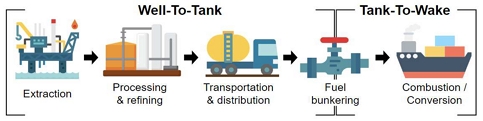
Generic Well-to-Wake supply chain
For the purposes of this paper, Well-to-Tank (WtT) refers to upstream emissions associated with feedstock extraction, fuel production, and distribution, Tank-to-Wake (TtW) refers to emissions from onboard fuel combustion or conversion during ship operation, and Well-to-Wake (WtW) refers to the combined emissions across the full fuel life cycle.
1.2 Problem Statement: Methodological Divergence and Policy
LCA is a systematic methodology for quantifying environmental impacts across a product's lifecycle [8]. Despite its well-established four-phase framework—goal and scope definition, inventory analysis, impact assessment, and interpretation (Figure 2)—each phase is subject to significant uncertainties [9]. Crucially, ISO standards do not prescribe specific methodologies for estimating these impacts, allowing for a high degree of flexibility that complicates direct comparisons between studies [10].
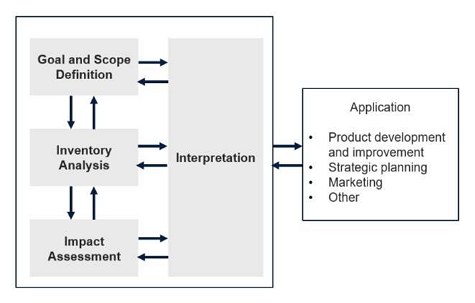
Main stages of lifecycle assessment framework
In the context of maritime policy, this methodological divergence creates "regulatory gray areas." Divergent choices in functional units, global warming potential (GWP) horizons, and allocation methods lead to inconsistent appraisal of alternative fuels. Such uncertainty not only complicates the establishment of default values but also hinders long-term investment and the effective transition to sustainable fuels. Although the global shipping industry is increasingly exploring alternative energy sources [11], the scarcity of research based on harmonized LCA methodologies often leads to an underestimation of the comprehensive environmental impacts of these fuels.
1.3 Objectives and Structure of the Study
This paper addresses the critical need for methodological consistency as a prerequisite for informed policy decision-making. Rather than merely offering suggestions for a specific regulatory body, the study aims to identify the key methodological determinants that should be harmonized to support a unified LCA framework for marine fuels and to provide a stable foundation for international maritime regulation. By critically reviewing the existing literature on marine fuel LCA and comparing relevant policy approaches adopted in other transport sectors, this paper seeks to provide pragmatic insights into how a standardized LCA framework can reduce regulatory ambiguity and industry-wide uncertainty.
Unlike previous studies, which mainly compare specific fuel pathways or report LCA results under varying assumptions, this review focuses on the methodological issues that shape regulatory consistency. Specifically, it contributes by: (1) synthesizing the principal sources of methodological divergence in marine fuel LCA studies; (2) comparing these issues with established policy approaches in other transport sectors; and (3) proposing a policy-oriented framework to support informed decision-making for maritime fuel regulation.
The overall objective is to establish a robust basis for the consistent appraisal of the greenhouse gas (GHG) emissions and sustainability performance of alternative marine fuels. Such harmonization is indispensable for providing a clear, unequivocal signal to both regulators and the shipping industry, thereby enabling a proactive and effective transition to net-zero shipping.
The remainder of this paper is organized as follows: Section 2 reviews previous literature on marine fuel LCA and compares policies in other transport sectors. Section 3 identifies technical requirements for improving the LCA framework within maritime instruments. Finally, Section 4 elaborates on the conclusion and broader policy implications.
2. Literature Review
2.1 LCA Application for Policy in Other Transport Sectors
Before analyzing specific studies on marine fuels, this section examines how LCA-based policies have been integrated into other transport sectors. The successful implementation of LCA-based regulations, such as Low Carbon Fuel Standards (LCFS), demonstrates that LCA is no longer just a research tool but a fundamental pillar for evaluating and enforcing environmental policies [12].
As shown in Table 1, LCA-based approaches are already deeply embedded in various regional and international regulatory frameworks. These policies rely on the accurate determination of a fuel’s Carbon Intensity (CI) across its entire lifecycle—from feedstock extraction and production to distribution and end-use. For example, under many of these regimes, fuel providers are required to achieve specific lifecycle GHG reduction targets (e.g., gCO2eq/MJ), creating a market-based mechanism where compliance is directly tied to the rigor of the LCA methodology [13].

List of policies with LCA approach in other transport sectors
A critical analysis of these existing frameworks reveals several key insights for the maritime sector:
- • Regulatory Precedents: Standards like California’s LCFS and the EU’s RED II have established that a Well-to-Wake (WtW) perspective is essential for preventing "carbon leakage" across the supply chain.
- • Safeguarding Sustainability: RED II and CORSIA have pioneered the integration of sustainability
- • criteria beyond carbon, such as preventing the use of biomass from land with high carbon stocks [14, 15].
- • Cross-Sectoral Alignment: ICAO’s CORSIA provides a particularly relevant template for the IMO, as it addresses international emissions through an agreed-upon LCA method that includes Induced Land Use Change (ILUC) and rigorous certification practices [16][17].
These established policies should be viewed as benchmarks for methodological harmonization. The shipping sector can leverage these precedents to reduce the "learning curve" in policy development and ensure cross-sectoral regulatory consisten
2.2. Review of Existing LCA Research on Marine Fuels
While the transport sector as a whole is moving toward LCA-based regulation, a review of specific literature on marine fuels reveals a significant lack of methodological consistency. Table 2 summarizes the diversity of approaches adopted across the 22 studies reviewed and highlights substantial divergence in key LCA parameters:
Comparative analysis of LCA Studies on marine fuels
- · Divergent Functional Units: The use of diverse functional units (g/MJ, g/kWh, tkm) hinders direct cross-pathway comparisons of environmental performance for policymakers
- · Inconsistent GWP Horizons: While most studies use GWP 100, several include GWP 20 or even GWP 500 [18], leading to vastly different appraisals of fuels with high methane or ammonia slip.
- · Varied LCI Databases: The use of different databases (GREET, Ecoinvent, GaBi, ELCD) introduces underlying data uncertainties that can obscure the true climate impact of alternative fuels.
These findings underscore the core premise of this paper: the current body of research, while technically rigorous, is too fragmented to provide a stable foundation for international maritime policy. The methodological "gray areas" identified in this review—ranging from functional unit selection to sustainability criteria—necessitate a move toward a unified and harmonized LCA framework to support informed and unequivocal policy decision-making.
3. Key Determinants for a harmonized LCA Framework in Shipping
Previous studies have extensively investigated alternative marine fuels using diverse LCA methodologies. As analyzed in Section 2, the broad variance in outcomes stems from inconsistencies in methodological criteria, such as GHG emission scope, Global Warming Potential (GWP) horizons, functional units, and inventory databases. To establish a robust and consistent framework for policy decision-making, the following factors must be harmonized.
To more clearly position the contribution of this study within the maritime regulatory context, Table 3 identifies selected methodological gaps in the current IMO framework for marine fuel assessment and links them to the harmonization measures proposed in this paper. By juxtaposing these gaps with the corresponding measures, the table highlights the practical relevance of the proposed framework for improving consistency in marine fuel LCA. It also demonstrates that harmonization is not merely a methodological issue, but a necessary condition for credible regulatory implementation, predictable compliance, and greater policy certainty.
Illustrative gap analysis between the current IMO approach to marine fuel assessment and the proposed harmonized LCA framework
3.1 GHG Emissions Scope
The UNFCCC identifies six primary greenhouse gases, yet existing mandatory IMO instruments—EEDI, EEXI, and CII—exclusively address CO₂ emissions [7][39]. While the Fourth IMO GHG Study provided estimates for CO₂, CH₄, N₂O, and Black Carbon (BC), most previous LCA research has omitted BC from its scope [5].
BC is a potent non-gaseous climate forcer with a warming impact second only to CO₂ in the maritime sector, possessing a GWP of approximately 900 [40]. Its inclusion would theoretically raise shipping's contribution to global CO₂-equivalent emissions from 3% to approximately 7% [1]. Its impact is particularly critical in the Arctic, where BC deposits accelerate ice melting by reducing the albedo effect [41].
Despite its significance, this paper suggests that the immediate regulatory framework should prioritize the three main GHGs (CO₂, CH₄, N₂O) to ensure alignment with other transport sectors and international reporting standards. Due to the current lack of standardized measurement protocols for BC, a phased-in approach is recommended. This allows for immediate policy action on gaseous emissions while continuing the technical development required to accurately reflect the industry's full climatic impact in the future.
3.2 Global Warming Potential
GWP measures a gas's heat-trapping ability relative to CO₂ over a specific timeframe. While a 20-year horizon (GWP20) is frequently used in sensitivity analyses to highlight the near-term impact of methane slip [28][35], the international regulatory consensus—including CORSIA and EU RED II—favors a 100-year horizon (GWP100) [42].
To ensure cross-sectoral comparability and alignment with the Paris Agreement’s long-term goals, this paper recommends the adoption of GWP100 as the primary metric for the IMO LCA framework. Crucially, the framework must utilize updated values from the IPCC Sixth Assessment Report (AR6) (e.g., CH₄: 29.8, N₂O: 273). Moving away from the outdated AR5 values prevalent in older studies is a prerequisite for ensuring that maritime policies remain scientifically synchronized with UNFCCC reporting standards.
3.3 Functional Unit : Bridging fuel intensity and regulatory Compliance
The functional unit is the reference basis for quantifying environmental impacts and ensuring comparability between different fuel technologies [8][43]. Applying inconsistent functional units to identical fuels leads to incomparable results, creating significant hurdles for policymakers [44].
Currently, other transport sectors have normalized their frameworks based on gCO₂eq/MJ_fuel. For the maritime sector, selecting an appropriate unit requires distinguishing between fuel production (WtT) and on-board consumption (TtW). Possible functional units can be categorized into three primary options, as evaluated in Table 4.
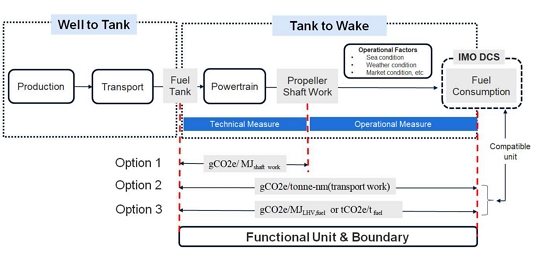
Diagram of possible functional units for IMO LCA Frameworks
Evaluation of functional units
While Option 1 (gCO₂eq/kWh) effectively captures engine efficiency, it fails to account for broader vessel-specific or operational factors. Option 2 (gCO₂eq/tonne-nm) is useful for monitoring individual vessel performance [45] but is influenced by complex variables like speed, weather, and cargo load, making it unsuitable for isolating the GHG intensity of the fuel itself [46].
To align with the 2006 IPCC Guidelines for National Greenhouse Gas Inventories, this paper proposes that gCO2eq/MJLHV,fuel is the most appropriate functional unit for the following reasons:
- · DCS Integration: This unit can be directly multiplied by fuel quantities reported to the IMO Data Collection System (DCS), facilitating seamless and transparent regulatory enforcement.
- · Cross-Sectoral Harmony: It aligns with established global standards in aviation (CORSIA), road transport, and the EU's FuelEU Maritime regulation.
- · Technological Neutrality: While the fuel-based unit does not inherently account for energy converter differences (e.g., Internal Combustion Engines vs. Fuel Cells), these variations can be addressed through differentiated TtW emission factors [47].
In conclusion, utilizing gCO2eq/ MJLHV,fuel provides a robust, concise, and stable basis for calculating Well-to-Wake emissions, enabling the IMO DCS to effectively reflect the life-cycle GHG intensity of the fuel pathway in a transparent and comparable manner. It should be noted, however, that this metric is intended to measure the fuel itself, rather than the specific operational performance of an individual ship or engine. Ship-level or engine-level performance may vary depending on vessel design, propulsion technology, engine configuration, and operating conditions, and therefore requires separate performance-based indicators.
3.4 LCA database / modelling tool
The selection of a Life Cycle Inventory (LCI) database is a primary factor contributing to the significant variability of results in marine fuel LCA studies. As analyzed in Section 2, the use of disparate data sources often leads to inconsistent emission factors for identical fuel pathways. To ensure the regulatory reliability of the IMO LCA framework and support informed policy decision-making, it is essential to understand the geographical coverage, methodological transparency, and process details of major databases and software tools.
Ecoinvent is one of the most comprehensive and widely recognized LCI databases globally. It provides consistent and transparent data based on industry-vetted averages across various sectors. The database is highly integrated into major LCA software like SimaPro and GaBi, predominantly utilizing a cradle-to-gate modeling approach. Its strengths lie in its extensive process documentation and broad category coverage, making it a reliable source for general industrial processes and energy backgrounds.
Developed by the Joint Research Centre (JRC) of the European Commission, the ELCD provides high-quality LCI data for core materials, energy carriers, transport, and waste management systems within the European context. It is designed to support the European Platform on Life Cycle Assessment and is accessible free of charge. While its data sets comply with ISO 14040/14444 standards, its scope is more focused on European industrial sectors and may require supplementation with other databases for broader applications
The GaBi database, provided by Sphera (formerly PE International), is renowned for being one of the largest and most consistent LCI repositories on the market. It offers a vast array of processes, particularly in manufacturing and energy production, which are updated annually by technical experts. GaBi’s strengths include high methodological consistency and detailed inventory documentation, supporting a wide variety of life cycle impact assessment (LCIA) methods.
Developed by Argonne National Laboratory, GREET is specifically designed to evaluate the environmental impacts of transportation fuels and vehicle technologies. It consists of two sub-models: the fuel-cycle (Well-to-Wheels) and the vehicle-cycle.
Although its primary focus is on the North American context, it is extensively used in maritime studies due to its robust modeling of alternative fuel pathways and its ability to analyze criteria pollutants alongside greenhouse gases.
SimaPro is a leading LCA software tool that integrates several LCI databases, including Ecoinvent and various industry-specific datasets. It is highly valued in the research community for its flexibility and ability to perform complex impact assessments using multiple global mainstream LCIA methods. The tool provides powerful graphical features, such as process tree diagrams, which aid in identifying carbon hotspots within the fuel supply chain.
The diversity of these tools underscores the challenge of establishing unified default emission values. For a harmonized regulatory framework, it is imperative that policymakers define standardized data selection criteria to prevent the "cherry-picking" of data that could artificially lower carbon intensity. Furthermore, the framework should mandate the use of databases that offer high methodological transparency to ensure that LCA results are auditable by third-party verifiers, thereby enhancing the policy robustness and global consistency of maritime regulations.
Comparative characteristics of major LCA databases and tools
3.5 Sustainability Criteria and Certification Scheme
To achieve a comprehensive evaluation of marine fuel sustainability, it is imperative to integrate environmental, social, and economic dimensions throughout the entire life cycle. As identified by Ashrafi et al. (2022) through a multi-stakeholder participatory approach [46], 18 sustainability criteria provide a systematic framework for evaluating alternative fuels, ensuring that greenhouse gas (GHG) reductions do not come at the expense of other ecological or social assets (Table 6).
Economic, environmental, and social criteria for evaluating alternative marine fuels [46]
From a policy perspective, a life-cycle approach to sustainability is essential for informing strategic investment decisions and preventing "burden-shifting" between different environmental impact categories [48]. Several existing transport regulations, most notably ICAO's CORSIA and the EU's RED II, have already established robust sustainability criteria to define eligible fuels.
ICAO’s CORSIA framework provides a highly relevant precedent for the maritime sector. It distinguishes between Sustainable Aviation Fuels (SAF) and Lower Carbon Aviation Fuels (LCAF), mandating that these fuels achieve at least a 10% reduction in life-cycle GHG emissions compared to conventional fuels and are not produced from high carbon-stock land [16]. Crucially, compliance is managed through approved Sustainability Certification Schemes (SCS).
Figure 4 illustrates the alignment between CORSIA and the International Sustainability and Carbon Certification (ISCC). This mechanism demonstrates how international regulatory bodies can utilize third-party certification to ensure that chemically identical fuels (e.g., bio-methanol vs. fossil-methanol) are distinguished based on their verified sustainability performance.
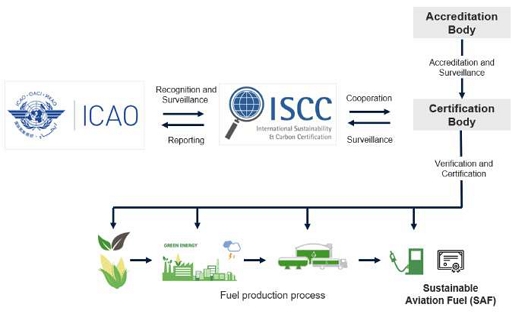
The processes and elements of sustainability certification: Alignment between CORSIA and ISCC
For the maritime sector to achieve a harmonized and enforceable regulatory framework, the recognition of certification schemes is essential. This allows for the use of "certified actual emission values," which provide more accurate data than conservative default values, incentivizing producers to optimize their supply chains.
In a regulatory context, default emission values should serve as transparent, comparable, and uniformly applicable benchmark values, particularly where pathway-specific data are unavailable or cannot be reliably verified. By contrast, certified actual values may be used to reflect geographically and operationally differentiated supply chains, provided that they are supported by robust certification systems, clearly defined data quality requirements, and independent third-party verification. A harmonized framework should therefore specify when default values apply, under what conditions actual values may be accepted, and how uncertainty arising from regional variability, data quality, and supply-chain differences should be managed. In this way, default values provide regulatory consistency, while actual values create incentives for verified improvements in supply-chain performance.
Considering the technical complexity of implementing global sustainability standards, this paper argues for a phased-in methodological approach to support stable policy transition:
- · Phase 1: Fundamental Criteria. Focus on life-cycle GHG emission reductions and land-use safeguards (e.g., avoiding high carbon-stock land).
- · Phase 2: Expanded Criteria. Incorporate broader sustainability dimensions, such as impacts on water
- · quality, soil health, and air pollution, as measurement protocols become standardized.
Sustainability criteria and allocation choices in other transport policies [17][49]
In conclusion, the analysis in Sections 3.6 to 3.8 indicates that the significant divergence in LCA outcomes is primarily driven by how studies handle functional units, sustainability criteria, co-product allocation, and modeling choices (A-LCA vs. C-LCA). Addressing these variances through a harmonized certification and criteria framework is a prerequisite for informed decision-making and the successful global uptake of low-carbon marine fuels.
3.6 Attributional (A-LCA) and consequential (C-LCA) modelling
The choice between attributional (A-LCA) and consequential (C-LCA) modelling—the latter also known as marginal modelling—is a fundamental decision in LCA methodology [50]. This selection is typically made during the goal and scope definition phase and determines how the system boundary is drawn and how impacts are quantified [51].
- · Attributional approach: A system modelling approach in which inputs and outputs are attributed to the functional unit of a product system by linking and/or partitioning the unit processes of the system according to a normative rule.
- · Consequential approach: A system modelling approach in which activities in a product system are linked so that activities are included in the product system to the extent that they are expected to change as a consequence of a change in demand for the functional unit.
Figure 5 provides a simple conceptual comparison between attributional LCA (A-LCA) and consequential LCA (C-LCA). A-LCA focuses on the environmental burdens directly associated with a defined product or fuel pathway, whereas C-LCA considers how total environmental burdens change when production or use changes. In this sense, A-LCA asks what share of existing burdens should be assigned to the product, while C-LCA asks what additional or avoided burdens arise as a consequence of a change in demand or production.
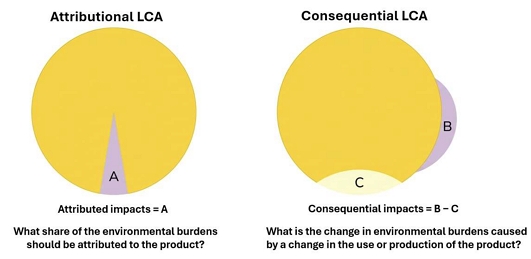
Conceptual comparison of attributional and consequential LCA. Adapted from National Academies of Sciences, Engineering, and Medicine [68], originally based on Weidema [67].
The primary differences between these two approaches, as identified by the European Council for Automotive R&D [52], are summarized in Table 8.
Main differences between attributional and consequential modelling principles [52]
Although the choice of modelling approach can significantly alter environmental impact results, many LCA studies on marine fuels do not explicitly state whether they employ A-LCA or C-LCA (see Table 1). This lack of transparency complicates the efforts of policymakers to harmonize default emission values.
Some researchers opt for C-LCA [20]-[22], arguing it is more appropriate for supporting climate policy decisions by considering the systemic consequences of product avoidance [53][54]. Conversely, others select A-LCA [23][24][26][37], contending it is better suited for national emission accounting and environmental taxation due to its focus on direct physical flows [55].
From a regulatory perspective, the CORSIA framework provides a practical template for balancing these two models. It utilizes A-LCA to account for physical flows (mass and energy) along the upstream process, while applying C-LCA specifically to address Indirect Land Use Change (ILUC) emissions through complex economic models like GTAP-BIO and GLOBIOM [16][17]. To clarify when each modelling approach is most appropriately applied, Table 9 summarizes the suggested use of A-LCA and C-LCA for different policy purposes in maritime fuel regulation.
Suggested application of attributional and consequential LCA approaches in maritime fuel policy
To ensure regulatory clarity and methodological stability in the maritime sector, this paper proposes the following:
- · Prioritization of A-LCA: For establishing robust targets and defining default Well-to-Wake (WtW) emission values, A-LCA should be prioritized. Its reliance on observable physical flows provides higher certainty and stability, which is essential for global regulatory compliance and fuel accounting.
- · Targeted Use of C-LCA: A degree of flexibility should be maintained to incorporate consequential elements strictly when addressing complex feedstock-to-fuel pathways, such as ILUC associated with biofuels.
By establishing A-LCA as the standard while allowing C-LCA for specific sustainability criteria, the maritime regulatory framework can achieve a balance between scientific integrity and policy enforceability, providing a clear and stable signal for the shipping industry's energy transition.
3.7 Allocation method for co-products: Balancing theory and regulatory practicability
In fuel production processes that generate multiple co-products, environmental impacts must be accurately defined and assigned to each output. The methodology chosen for this assignment is critical, as it directly dictates the final carbon intensity value of the marine fuel. Two primary approaches are widely applied in LCA studies:
Proportional Allocation: This method partitions inputs and impacts based on physical or economic relationships, such as mass, energy content (Lower Heating Value), or market value.
System Expansion (Substitution Method): This approach expands the system boundaries to account for the environmental impacts of products displaced by the co-products, effectively "crediting" the main product for emissions avoided elsewhere.
While system expansion is often considered the preferred theoretical approach in LCA literature—particularly for consequential LCAs—and is recommended by ISO standards when feasible [8], its application in a global regulatory context presents significant challenges.
As summarized in Table 10, existing regulations vary significantly in their handling of co-products, reflecting different legislative priorities.
Allocation choices in fuel policies [17][49]
This lack of international harmonization creates substantial uncertainty for marine fuel producers and the shipping industry. Research has demonstrated that the calculated emissions for a single fuel pathway can vary significantly depending on the chosen allocation method [56], potentially leading to conflicting regulatory interpretations and market distortions.
For a global regulatory framework like the IMO's to be effective, it must prioritize transparency, stability, and ease of verification. While system expansion may be theoretically robust, its reliance on complex assumptions about "displaced products" and market dynamics makes it difficult to implement and verify on a global scale.
In contrast, physical allocation (specifically energy-based) offers several advantages for international policy:
- • Simplicity and Stability: Energy-based allocation is relatively straightforward to apply, and its results remain stable over time because the underlying physical data (e.g., LHV) is unambiguous and widely documented.
- • Regulatory Alignment: Major international measures, including ICAO's CORSIA and the EU's RED II, have already moved toward energy-based allocation for fuel-related co-products.
To enhance the robustness and enforceability of maritime fuel policies, this paper argues that the maritime LCA framework should prioritize energy-based allocation for most fuels and their co-products. This approach provides a concise and transparent basis for calculating Well-to-Wake emissions, ensuring that the policy remains practical for regulators while providing clear, predictable signals for industry investment.
3.8 Indirect Emissions and Land Use Change
Indirect GHG emissions are defined as those occurring outside the immediate product system or supply chain as a result of the activities of the reporting entity, such as the international shipping sector. These emissions are often driven by market-mediated factors, including new sources of demand [57]. A prominent example is the relationship between biofuel demand and cropland expansion. The competition for agricultural land induced by biofuel production can result in direct land use changes (DLUC), as well as the expansion of crop acreage into native vegetation and forested areas [58].
This expansion, in turn, increases carbon emissions and triggers indirect land use changes (ILUC) that contribute to overall GHG emissions while simultaneously causing a rise in global crop prices [59]-[61].
It is noteworthy that LCA studies evaluating biofuels in sectors other than shipping typically assess both DLUC and ILUC emissions associated with feedstock cultivation and fuel production.
- • Direct Land Use Change (DLUC): Several studies have demonstrated that GHG emissions due to DLUC can be either positive or negative, depending on the type of land use prior to the implementation of energy crops [62][63]. For instance, if biofuel is produced on land with high carbon stocks—such as forests, peatlands, or pastures—it can have a significantly negative environmental impact due to immediate carbon release [64].
- • Indirect Land Use Change (ILUC): Studies addressing the expansion of cropland to meet growing biofuel demand emphasize severe concerns regarding ILUC. These effects result not only in increased GHG emissions but also in numerous other undesirable environmental and socio-economic impacts, such as biodiversity loss and food security issues [65].
From a regulatory perspective, maritime policies should not overlook indirect emissions related to the production of alternative fuels. Currently, two primary regulatory philosophies exist among international frameworks:
- • Explicit Accounting: Frameworks such as CORSIA, LCFS, RTFO, and RFS explicitly calculate and include GHG emissions induced by ILUC in the fuel's total carbon intensity score.
- • Risk-Based Restriction: The EU's RED II adopts a different approach by restricting or capping the use of feedstocks that present a "high risk" of ILUC emissions [66].
Despite its importance, it must be acknowledged that estimated ILUC emissions are subject to high levels of uncertainty. These values vary significantly depending on the type of biofuel, the feedstocks utilized, the specific geographical location of production, and the economic models employed [17].
For the maritime sector to establish a harmonized and stable LCA framework, it is critical to determine whether to adopt an accounting-based approach (like CORSIA) or a restriction-based approach (like RED II). A unified methodology for addressing ILUC is essential to prevent regulatory fragmentation and to provide clear, long-term guidance for the production and certification of sustainable marine fuels.
4. Conclusion and policy implications
The global shipping industry is witnessing an unprecedented transition toward low- and zero-carbon fuels to achieve timely decarbonization. However, this transition is currently hampered by a significant lack of harmonized LCA methodologies, which are a prerequisite for informed policy decision-making and the identification of truly sustainable alternative fuels. By critically examining preceding LCA research and regional policies—including established frameworks in the aviation and road transport sectors—this study provides a strategic roadmap for the development of a robust maritime LCA framework.
The research findings indicate that current maritime instruments require substantial enhancement to effectively support the uptake of sustainable fuels. A harmonized LCA framework is not merely a technical tool; it is a regulatory necessity to ensure environmental integrity while minimizing unintended consequences such as market distortion or carbon leakage. In particular, the robustness of these guidelines is indispensable for the successful implementation of mid-term measures, such as the Goal-based Marine Fuel Standard (GFS).
Based on the comprehensive review and technical analysis, the key determinants for a unified and harmonized LCA framework are summarized as follows:
- • GHG Scope: The regulatory scope should initially prioritize CO₂, CH₄, and N2O. This focus ensures alignment with other transport sector standards and accounts for the vast majority of maritime GHG emissions while technical measurement protocols for non-gaseous forcers like Black Carbon are further matured.
- • Global Warming Potential: To ensure consistency with the UNFCCC and facilitate cross-sectoral comparative assessments, GWP100 utilizing the latest IPCC AR6 values must be adopted. This ensures that maritime policies remain scientifically synchronized with global climate goals.
- • Functional Unit: For seamless regulatory enforcement and fuel accounting, gCO₂eq/MJ_LHV, fuel is the most appropriate unit. It enables direct integration with the IMO Data Collection System (DCS) and facilitates harmony with regional policies like FuelEU Maritime.
- • Modeling Approach: Attributional LCA (A-LCA) should be prioritized for setting default emission values to ensure methodological stability and certainty. However, a degree of flexibility for Consequential LCA (C-LCA) is necessary to address specific complexities, such as Indirect Land Use Change (ILUC).
- • Allocation Method: An energy-based allocation method is recommended for co-products. Its conciseness and transparency offer a stable basis for global policy, enhancing administrative feasibility and reducing data-related disputes.
- • Phased Sustainability Criteria: A two-phased approach is proposed: Phase 1 focusing on immediate GHG reduction thresholds and high carbon-stock land safeguards, and Phase 2 expanding to broader ecological impacts, such as water, soil, and air quality.
As maritime GHG regulations become increasingly complex, the absence of a unified LCA methodology could exacerbate industry uncertainty and hinder long-term investment. The robustness of LCA policy serves as a critical signal to both shipowners and fuel producers, providing the legal and financial certainty required for a multi-decadal energy transition.
Future research should further refine the methodological foundations discussed in this review, particularly with regard to the inclusion of non-gaseous climate forcers such as black carbon, the treatment of indirect emissions and ILUC, the development of transparent and globally representative default emission factor datasets, and the verification of certified actual values through robust certification frameworks. Advancing these areas will be essential for improving both the scientific robustness and practical enforceability of maritime LCA regulation.
In conclusion, establishing unequivocal and harmonized LCA guidelines is indispensable to preclude a fragmented regulatory landscape. Given the urgency of the climate crisis, the proactive refinement of the maritime LCA framework is not just a technical task, but a strategic imperative to ensure that the global shipping industry’s journey toward a net-zero future is built on a foundation of scientific rigor and policy consistency.
Acknowledgments
This paper is an extended version of the doctoral dissertation entitled “Advancement of Life Cycle Assessment Policy Framework on Marine Fuels towards Decarbonisation of the Shipping Sector” by the corresponding author.
Author Contributions
Conceptualization, S. M. Ha; Formal Analysis, S. M. Ha; Investigation, S. M. Ha; Data Curation, S. M. Ha; Writing-Original Draft Preparation, S. M. Ha.
References
- P. Friedlingstein, M. O'sullivan, M. W. Jones, R. M. Andrew, J. Hauck, A. Olsen, et al., "Global carbon budget 2020," Earth System Science Data, vol. 12, no. 4, pp. 3269-3340, 2020.
- T. Smith, J. Jalkanen, B. Anderson, J. Corbett, J. Faber, S. Hanayama, et al., "Third IMO greenhouse gas study 2014," 2015.
- IMO. RESOLUTION MEPC.304(72) Initial IMO strategy on reduction of GHG emissions from ships. IMO, London, UK; 2018.
-
S. Bullock, J. Mason, A. Larkin, "The urgent case for stronger climate targets for international shipping," Climate Policy, vol. 22, pp. 301-309, 2022.
[https://doi.org/10.1080/14693062.2021.1991876]

- IMO. Fourth Greenhouse Gas Study 2020. IMO, London, UK2020.
- IMO. Guidelines for voluntary use of the ship energy efficiency operational indicator (EEOI). IMO, London, UK; 2009.
- IMO. Further shipping GHG emission reduction measures adopted. 2021.
- ISO. ISO 14040: 2006 Environmental Management—Life Cycle Assessment—Principles and Framework. Geneva, Switzerland2006.
- J. W. Baker and M. D. Lepech, "Treatment of uncertainties in life cycle assessment," International Congress on Structral Safety and Reliability, 2009.
- F. Carvalho, J. O’malley, L. Osipova, and N. Pavlenko, "Key issues in LCA methodology for marine fuels," Washington, DC. 2023.
- DNV. Alternative fuels insight. 2022.
-
E. Lindstad and A. Rialland, "LNG and cruise ships, an easy way to Fulfil regulations—versus the need for reducing GHG emissions," Sustainability, vol. 12, p. 2080, 2020.
[https://doi.org/10.3390/su12052080]
-
S. Farzad, M. Mandegari, J. F. Görgens, "Life cycle assessment of lignocellulosic biorefineries," Recent Advances in Bioconversion of Lignocellulose to Biofuels and Value-Added Chemicals within the Biorefinery Concept, Elsevier, pp. 259-277, 2020.
[https://doi.org/10.1016/B978-0-12-818223-9.00010-2]
-
M. Brandão, E. Azzi, R. M. Novaes, A. Cowie, "The modelling approach determines the carbon footprint of biofuels: the role of LCA in informing decision makers in government and industry," Cleaner Environmental Systems, vol. 2, p. 100027, 2021.
[https://doi.org/10.1016/j.cesys.2021.100027]
-
T. Searchinger, R. Heimlich, R. A. Houghton, F. Dong, A. Elobeid, J. Fabiosa, et al., "Use of US croplands for biofuels increases greenhouse gases through emissions from land-use change," Science, vol. 319, pp. 1238-1240, 2008.
[https://doi.org/10.1126/science.1151861]
- International Civil Aviation Organization. CORSIA Supporting Document: CORSIA Eligible Fuels‐Life Cycle Assessment Methodology. 2019.
-
M. Prussi, U. Lee, M. Wang, R. Malina, H. Valin, F. Taheripour, et al., "CORSIA: The first internationally adopted approach to calculate life-cycle GHG emissions for aviation fuels," Renewable and Sustainable Energy Reviews. vol. 150, p. 111398, 2021.
[https://doi.org/10.1016/j.rser.2021.111398]
-
Y. Bicer and I. Dincer, "Clean fuel options with hydrogen for sea transportation: A life cycle approach," International Journal of Hydrogen Energy, vol. 43, pp. 1179-1193, 2018.
[https://doi.org/10.1016/j.ijhydene.2017.10.157]
-
C. Strazza, A. Del Borghi, P. Costamagna, A. Traverso, and M. Santin, "Comparative LCA of methanol-fuelled SOFCs as auxiliary power systems on-board ships," Applied Energy, vol. 87, pp. 1670-1678, 2010.
[https://doi.org/10.1016/j.apenergy.2009.10.012]
-
S. Bengtsson, K. Andersson, and E. Fridell, "A comparative life cycle assessment of marine fuels: liquefied natural gas and three other fossil fuels," Proceedings of the Institution of Mechanical Engineers, Part M: Journal of Engineering for the Maritime Environment, vol. 225, pp. 97-110, 2011.
[https://doi.org/10.1177/1475090211402136]
-
S. Bengtsson, E. Fridell, and K. Andersson, "Environmental assessment of two pathways towards the use of biofuels in shipping," Energy policy, vol. 44, pp. 451-63, 2012.
[https://doi.org/10.1016/j.enpol.2012.02.030]
-
S. Brynolf, E. Fridell, and K. Andersson, "Environmental assessment of marine fuels: liquefied natural gas, liquefied biogas, methanol and bio-methanol," Journal of cleaner production, vol. 74, pp. 86-95, 2014.
[https://doi.org/10.1016/j.jclepro.2014.03.052]
-
P. Gilbert, C. Walsh, M. Traut, U. Kesieme, K. Pazouki, A. Murphy, "Assessment of full life-cycle air emissions of alternative shipping fuels," Journal of cleaner production, vol. 172, pp. 855-866, 2018.
[https://doi.org/10.1016/j.jclepro.2017.10.165]
-
H. El‐Houjeiri, J. C. Monfort, J. Bouchard, and S. Przesmitzki, "Life cycle assessment of greenhouse gas emissions from marine fuels: a case study of Saudi crude oil versus natural gas in different global regions," Journal of Industrial Ecology, vol. 23, pp. 374-388, 2019.
[https://doi.org/10.1111/jiec.12751]
-
S. Hwang, B. Jeong, K. Jung, M. Kim, and P. Zhou, "Life cycle assessment of LNG fueled vessel in domestic services," Journal of Marine Science and Engineering, vol. 7, p. 359, 2019.
[https://doi.org/10.3390/jmse7100359]
- Thinkstep, Emission Study on the Use of LNG as Marine Fuel, 2019.
-
A. Sharafian, P. Blomerus, and W. Mérida, "Natural gas as a ship fuel: Assessment of greenhouse gas and air pollutant reduction potential," Energy Policy, vol. 131, 332-346, 2019.
[https://doi.org/10.1016/j.enpol.2019.05.015]
-
J. J. Winebrake, J. J. Corbett, F. Umar, and D. Yuska, "Pollution tradeoffs for conventional and natural gas-based marine fuels," Sustainability, vol. 11, p. 2235, 2019.
[https://doi.org/10.3390/su11082235]
-
M. Perčić, N. Vladimir, and A. Fan, "Life-cycle cost assessment of alternative marine fuels to reduce the carbon footprint in short-sea shipping: A case study of Croatia," Applied Energy, vol. 279, p. 115848, 2020.
[https://doi.org/10.1016/j.apenergy.2020.115848]
-
K. Spoof-Tuomi and S. Niemi, "Environmental and economic evaluation of fuel choices for short sea shipping," Clean Technologies, vol. 2, pp. 34-52, 2020.
[https://doi.org/10.3390/cleantechnol2010004]
-
S. J. Seithe, A. Bonou, D. Giannopoulos, C. A. Georgopoulou, and M. Founti, "Maritime transport in a life cycle perspective: How fuels, vessel types, and operational profiles influence energy demand and greenhouse gas emissions," Energies, vol. 13, p. 2739, 2020.
[https://doi.org/10.3390/en13112739]
- N. Pavlenko, B. Comer, Y. Zhou, N. Clark, and D. Rutherford, The Climate Implications of Using LNG as a Marine Fuel, Working Paper 2020-02, International Council on Clean Transportation (ICCT), Washington, DC, USA, 2020.
-
B. Manouchehrinia, Z. Dong, and T. A. Gulliver, "Well-to-Propeller environmental assessment of natural gas as a marine transportation fuel in British Columbia, Canada," Energy Reports, vol. 6, pp. 802-812, 2020.
[https://doi.org/10.1016/j.egyr.2020.03.016]
-
H. Jang, B. Jeong, P. Zhou, S. Ha, and D. Nam, "Demystifying the lifecycle environmental benefits and harms of LNG as marine fuel," Applied Energy, vol. 292, p. 116869, 2021.
[https://doi.org/10.1016/j.apenergy.2021.116869]
- B. Comer and L. Osipova, "Accounting for well-to-wake carbon dioxide equivalent emissions in maritime transportation climate policies," International Council on Clean Transportation, 2021.
-
L. Bilgili, "Comparative assessment of alternative marine fuels in life cycle perspective," Renewable and Sustainable Energy Reviews, vol. 144, p. 110985, 2021.
[https://doi.org/10.1016/j.rser.2021.110985]
-
E. Malmgren, S. Brynolf, E. Fridell, M. Grahn, and K. Andersson, "The environmental performance of a fossil-free ship propulsion system with onboard carbon capture–a life cycle assessment of the HyMethShip concept," Sustainable Energy & Fuels, vol. 5, pp. 2753-2770, 2021.
[https://doi.org/10.1039/D1SE00105A]
-
A. Fernández-Ríos, G. Santos, J. Pinedo, E. Santos, I. Ruiz-Salmón, J. Laso, et al., "Environmental sustainability of alternative marine propulsion technologies powered by hydrogen-a life cycle assessment approach," Science of the Total Environment, vol. 820, p. 153189, 2022.
[https://doi.org/10.1016/j.scitotenv.2022.153189]
- UNFCCC. Glossary of climate change acronyms and terms. 2020.
- N. Olmer, B. Comer, B. Roy, and X. Mao, and D. Rutherford, "Greenhouse gas emissions from global shipping, 2013–2015 detailed methodology," International Council on Clean Transportation: Washington, DC, USA, pp. 1-38, 2017.
-
M. O. Andreae and A. Gelencsér, "Black carbon or brown carbon? The nature of light-absorbing carbonaceous aerosols," Atmospheric Chemistry and Physics, vol. 6, pp. 3131-3148, 2006.
[https://doi.org/10.5194/acp-6-3131-2006]
-
R. S. Capaz, J. A. Posada, P. Osseweijer, and J. E. Seabra, "The carbon footprint of alternative jet fuels produced in Brazil: exploring different approaches," Resources, Conservation and Recycling. vol. 166, p. 105260, 2021.
[https://doi.org/10.1016/j.resconrec.2020.105260]
-
M. DeMarco and M-OP. Fortier, "Functional unit choice in space conditioning life cycle assessment: Review and recommendations," Energy and Buildings, vol. 255, p. 111626, 2022.
[https://doi.org/10.1016/j.enbuild.2021.111626]
-
J. Artz, T. E. Müller, K. Thenert, J. Kleinekorte, R. Meys, A. Sternberg, et al., "Sustainable conversion of carbon dioxide: an integrated review of catalysis and life cycle assessment," Chemical reviews, vol. 118, pp. 434-504, 2018.
[https://doi.org/10.1021/acs.chemrev.7b00435]
- IMO. Proposal to further develop the draft Lifecycle GHG and carbon intensity guidelines for maritime fuels (draft LCA Guidelines), ISWG-GHG11/2/4. IMO, London, UK; 2022.
-
M. Ashrafi, J. Lister, and D. Gillen, "Toward a harmonization of sustainability criteria for alternative marine fuels," Maritime Transport Research, vol. 3, p. 100052, 2022.
[https://doi.org/10.1016/j.martra.2022.100052]
- IMO. Interim report of the Correspondence Group on Marine Fuel Life Cycle GHG Analysis, MEPC 79/7/12. IMO, London, UK; 2022.
- A. Miu, H. Sornn-Friese, C. Y. Chun, E. P. González, A. Stephens, R. Waterton, Defining Sustainability Criteria for Marine Fuels: Fifteen Issues, Principles and Criteria for Zero and Low Carbon Fuels for Shipping, 2021.
-
T. Wardenaar, T. Van Ruijven, A. M. Beltran, K. Vad, J. Guinée, and R. Heijungs, "Differences between LCA for analysis and LCA for policy: a case study on the consequences of allocation choices in bio-energy policies," The International Journal of Life Cycle Assessment, vol. 17, pp. 1059-1067, 2012.
[https://doi.org/10.1007/s11367-012-0431-x]
-
M. A. Thomassen, R. Dalgaard, R. Heijungs, and I. De Boer, "Attributional and consequential LCA of milk production," The International Journal of Life Cycle Assessment, vol. 13, pp. 339-349, 2008.
[https://doi.org/10.1007/s11367-008-0007-y]
-
G. Sonnemann, B. Vigon, M. Rack, and S. Valdivia, "Global guidance principles for life cycle assessment databases: development of training material and other implementation activities on the publication," The International Journal of Life Cycle Assessment, vol. 18, pp. 1169-1172, 2013.
[https://doi.org/10.1007/s11367-013-0563-7]
- O. Schuller, M. Baitz, V. Saint-Antonin, P. Collet, and J. Sabathier, "Attributional vs. Consequential LCA Methodology Overview, Review and Recommendations with Focus on Well-to-Tank and Well-to-Wheel Assessments," EUCar: Etterbeek, Belgium; 2020.
-
M. Brandão, R. Clift, A. Cowie, S. Greenhalgh, "The use of life cycle assessment in the support of robust (climate) policy making: Comment on" Using attributional life cycle assessment to estimate climate-change mitigation...". Journal of Industrial Ecology. vol. 18, pp. 461-463, 2014.
[https://doi.org/10.1111/jiec.12152]
-
R. J. Plevin, M. A. Delucchi, and F. Creutzig, "Using attributional life cycle assessment to estimate climate‐change mitigation benefits misleads policy makers," Journal of Industrial Ecology, vol. 18, pp. 73-83, 2014.
[https://doi.org/10.1111/jiec.12074]
-
T. Prapaspongsa and S. H. Gheewala, "Consequential and attributional environmental assessment of biofuels: implications of modelling choices on climate change mitigation strategies," The International Journal of Life Cycle Assessment, vol. 22, pp. 1644-1657, 2017.
[https://doi.org/10.1007/s11367-017-1355-2]
-
V. Kyttä, M. Roitto, A. Astaptsev, M. Saarinen, and H. L. Tuomisto, "Review and expert survey of allocation methods used in life cycle assessment of milk and beef," The International Journal of Life Cycle Assessment, vol. 27, pp. 191-204, 2022.
[https://doi.org/10.1007/s11367-021-02019-4]
-
E. L. Plambeck, "Reducing greenhouse gas emissions through operations and supply chain management," Energy economics, vol. 34, pp. S64-S74, 2012.
[https://doi.org/10.1016/j.eneco.2012.08.031]
-
K. Austin, J. P. Jones, and C. M. Clark, "A review of domestic land use change attributable to US biofuel policy," Renewable and Sustainable Energy Reviews, vol. 159, p. 112181, 2022.
[https://doi.org/10.1016/j.rser.2022.112181]
-
S. Ahlgren and L. Di Lucia, "Indirect land use changes of biofuel production–a review of modelling efforts and policy developments in the European Union," Biotechnology for biofuels, vol. 7, p. 35, 2014.
[https://doi.org/10.1186/1754-6834-7-35]
-
M. Khanna, C. L. Crago, and M. Black, "Can biofuels be a solution to climate change? The implications of land use change-related emissions for policy," Interface Focus, vol. 1, pp. 233-247, 2011.
[https://doi.org/10.1098/rsfs.2010.0016]
-
Y. Zheng and F. Qiu, "Bioenergy in the Canadian Prairies: Assessment of accessible biomass from agricultural crop residues and identification of potential biorefinery sites," Biomass and Bioenergy, vol. 140, p. 105669, 2020.
[https://doi.org/10.1016/j.biombioe.2020.105669]
-
L. B. Guo, "Gifford RM. Soil carbon stocks and land use change: a meta analysis," Global Change Biology, vol. 8, pp. 345-360, 2002.
[https://doi.org/10.1046/j.1354-1013.2002.00486.x]
-
F. Van Stappen, I. Brose, and Y. Schenkel, "Direct and indirect land use changes issues in European sustainability initiatives: State-of-the-art, open issues and future developments," Biomass and bioenergy, vol. 35, pp. 4824-4834, 2011.
[https://doi.org/10.1016/j.biombioe.2011.07.015]
-
W. B. Aoun and B. Gabrielle, "Life cycle assessment and land-use changes: effectiveness and limitations," Life-cycle assessment of biorefineries, p. 322, 2017.
[https://doi.org/10.1016/B978-0-444-63585-3.00008-5]
- G. Woltjer, V. Daioglou, B. Elbersen, G. B. Ibañez, E. Smeets, D. S. González, et al., "Study report on reporting requirements on biofuels and bioliquids stemming from the directive (EU) 2015/1513., 2017.
-
I. Mayeres, S. Proost, E. Delhaye, P. Novelli, S. Conijn, I. Gómez-Jiménez, et al., "Climate ambitions for European aviation: Where can sustainable aviation fuels bring us?" Energy Policy, vol. 175, p. 113502, 2023.
[https://doi.org/10.1016/j.enpol.2023.113502]
- B. P. Weidema, “Market information in life cycle assessment,” Environmental Project No. 863. Danish Environmental Protection Agency, Copenhagen; 2003. p. 147.
- National Academies of Sciences, Engineering, and Medicine. Current methods for life-cycle analyses of low-carbon transportation fuels in the United States. Washington, DC: The National Academies Press; 2022.